
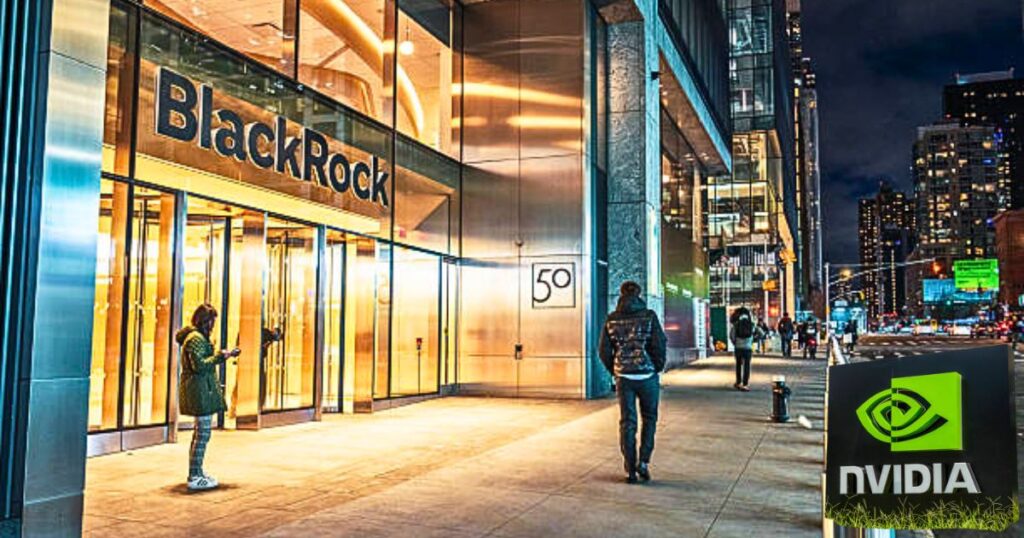
As BlackRock conceals toxic credit losses, the AI bubble, symbolized by NVIDIA, could be the spark that ignites a full-blown systemic crisis.
The Dual Danger: Collapsing Credit Meets Technological Euphoria
Global financial markets are facing an unprecedented convergence of risks: a silent credit crisis brewing in illiquid corporate debt and a fierce speculative euphoria gripping the technology sector. NVIDIA, the current champion of the Artificial Intelligence (AI) boom, stands as the most prominent symbol of this speculative excess. The intersection of these two extremes—the reality of hidden losses and the unsustainable promise of growth—creates a landscape of acute systemic fragility.
The case of BlackRock, forced to write off $150 million in debt from Renovo Home Partners, serves as the clearest alarm bell in the credit market. This event highlights the extreme opacity with which major asset managers value private loans. By maintaining the debt at full value (“at par”) despite clear signs of corporate distress—a phenomenon critics call the “valuation black box”—firms are deliberately postponing the recognition of massive losses.
This strategy of delayed confession extends far beyond BlackRock’s balance sheet.
The Cracks in the Foundation Widen
The credit crisis is already systemic:
-
Corporate Defaults: US corporate bankruptcies have soared to their highest levels since 2010, indicating widespread distress among “zombie companies” that were only kept alive by the ultra-low interest rates of the last fifteen years.
-
Real Estate Fallout: The Commercial Mortgage-Backed Securities (CMBS) market, particularly the office sector, is in “full-on collapse,” with delinquency rates surpassing post-2008 highs, trapping lenders in assets they cannot liquidate.
-
“Extend and Pretend”: Banks and private credit institutions are actively engaged in “extend and pretend”—rolling over maturing loans and renegotiating terms with distressed borrowers—to avoid selling assets at fire-sale prices and having to recognize the capital losses immediately. This practice, now documented even by the Federal Reserve, is merely delaying a massive wave of defaults.
The trillions of dollars tied up in this toxic debt represent the financial hangover from a prolonged era of cheap money.
The AI Bubble: NVIDIA as the Apex
The other face of the monetary hangover is the spectacular surge in speculative assets. With vast liquidity chasing returns, capital has flooded into high-growth, often non-profitable, sectors, culminating in the AI boom. NVIDIA, valued exponentially based on its near-monopoly on high-end AI chips (GPUs), represents the pinnacle of this enthusiasm.
While its technology is transformative, the stock’s valuation relies on sustaining an unprecedented rate of growth into perpetuity. Financial commentators, recalling the skepticism of figures like Michael Burry, warn that the AI sector is experiencing a classic bubble fueled by narrative rather than sustainable economics. A significant correction or a “fiasco” at the level of NVIDIA, triggered by competition, market saturation, or a slowdown in major capital expenditures, would deliver a devastating emotional and capital shock to the market.
The Risk of Systemic Convergence
The true danger lies not in the failure of either the credit market or the AI bubble in isolation, but in their simultaneous collapse.
-
Credit Collapse (Reality Check): The moment institutional players can no longer “extend and pretend,” and are forced to mark down their private credit assets to zero, the capital base of major lenders and asset managers will be severely eroded.
-
NVIDIA Drop (Euphoria Shock): A sharp correction in high-flying stocks like NVIDIA would trigger widespread panic, leading to forced liquidations across other asset classes, including those previously thought safe.
The confluence of a hollowed-out credit system meeting a speculative shock could rapidly lead to financial contagion. As the system prioritizes bailouts or resorts to further money printing to cover the trillions in losses, the ultimate cost of this dual crisis will inevitably fall upon the ordinary taxpayer through currency debasement and inflation.
By Orlando J. Gutierrez