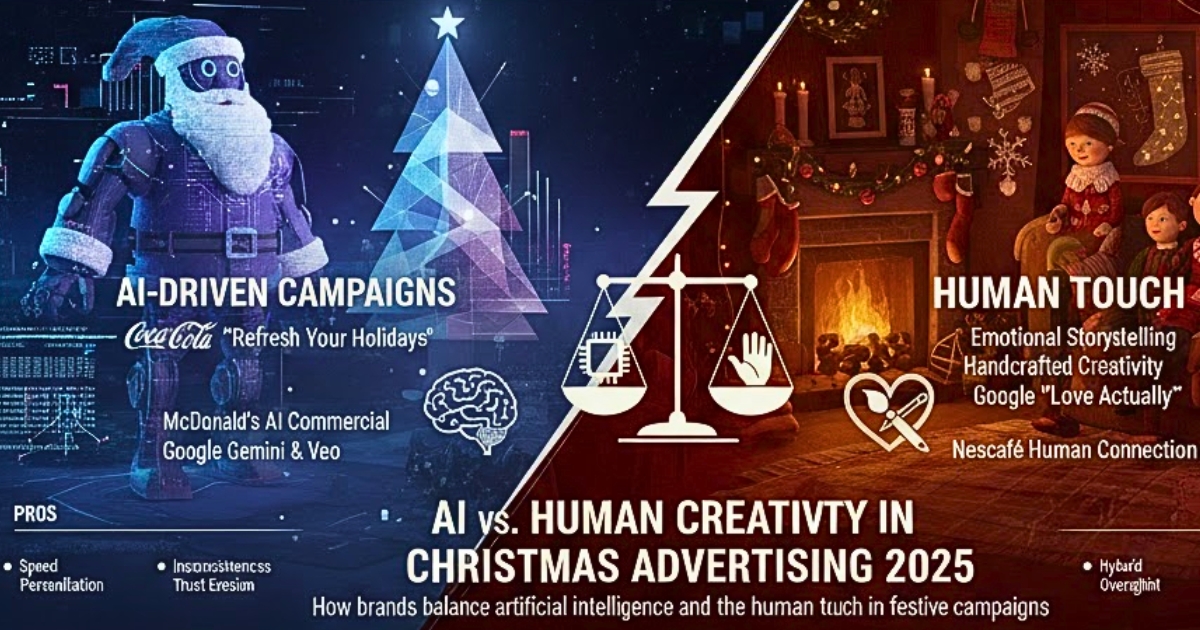
Exploring how brands are balancing artificial intelligence and the human touch in festive campaigns in 2025: examples, pros, cons, and lessons for marketers.
How brands balance artificial intelligence and the human touch in festive campaigns: examples, pros, cons, and key lessons for marketers.
In the 2025 marketing and advertising landscape, Christmas campaigns have become a defining battleground in the ongoing debate between artificial intelligence (AI) and human creativity. While some brands have embraced AI for its efficiency and ability to generate innovative content at scale, others have doubled down on emotional storytelling and handcrafted creativity to connect with nostalgia-driven audiences.
This holiday season has clearly divided brands, showcasing both technological breakthroughs and notable consumer backlash. According to recent analyses, the trend reveals a delicate balance: AI accelerates production and personalization, but creative imperfections and emotional missteps risk eroding consumer trust.
Brands Betting on AI-Driven Campaigns
Several global brands have leaned heavily into AI to reinvent their Christmas advertising, focusing on speed, customization, and novelty.
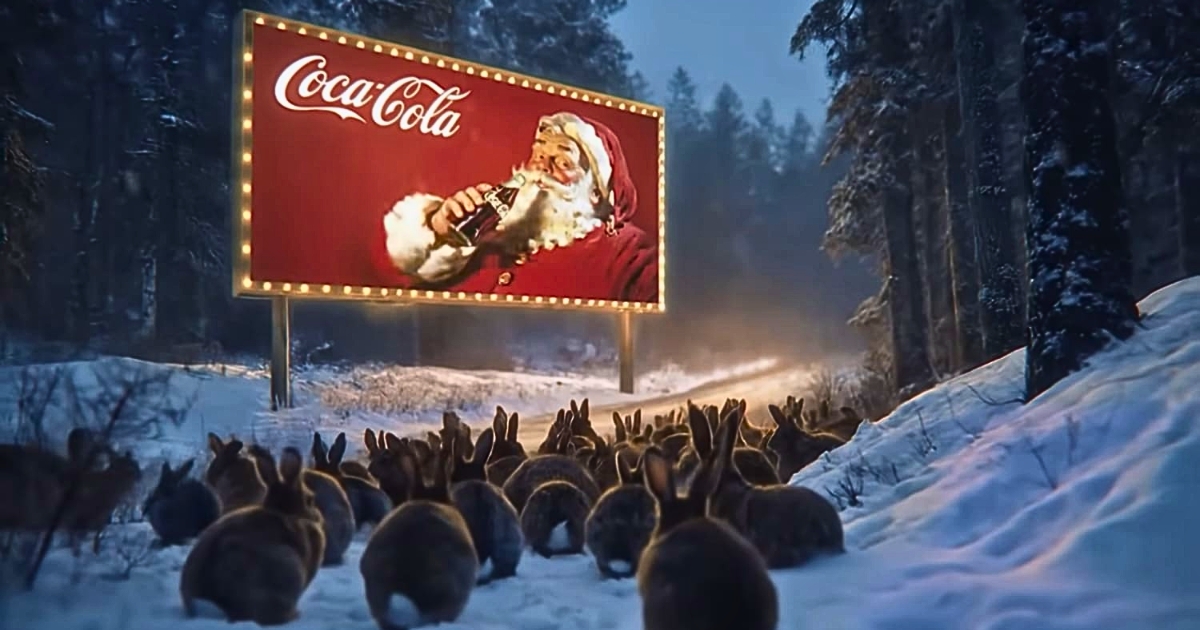
Coca-Cola, for example, launched its “Refresh Your Holidays” campaign, allowing users to remix festive visuals using AI-powered tools. To reinforce human connection, the brand complemented the digital initiative with its iconic physical Christmas truck tour across the United Kingdom. Despite this hybrid approach, the campaign drew criticism over inconsistencies in AI-generated designs—particularly variations in the classic truck—raising concerns among loyal consumers.
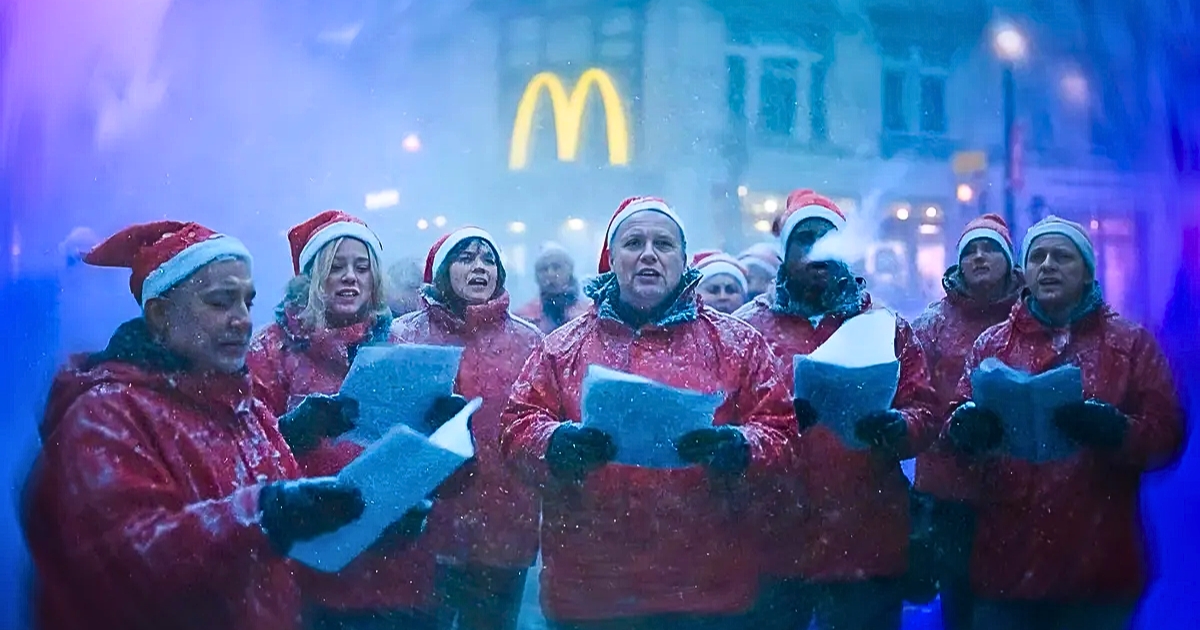
McDonald’s took a more radical step in the Netherlands by releasing a fully AI-generated holiday commercial featuring a dark, parody-style soundtrack. The ad was pulled after just three days following strong public backlash, underscoring the reputational risks of relying on AI without sufficient human oversight.
Other brands pursued a more balanced path. Google leveraged tools such as Gemini and Veo to produce animated short films, while simultaneously releasing a nostalgic, human-centered reunion story inspired by Love Actually. Svedka revived its iconic “Fembot” mascot using AI for a Super Bowl debut, and Nescafé used AI as a support tool to enhance emotionally driven narratives centered on human connection rather than replacing it
The Enduring Power of Human Creativity
In contrast, several brands deliberately rejected AI altogether in favor of fully human-crafted storytelling.
Apple stood out with films such as “A Critter Carol” and “Fuzzy Feelings”, created using handmade puppets and practical effects—without AI or CGI. These ads emphasized emotion, artistry, and originality, evoking childlike wonder and authentic connection in an increasingly automated media environment.
Maybelline followed a similar path with “Maybe This Christmas”, a nostalgic micro-drama reminiscent of classic Hallmark storytelling. The campaign relied on actor chemistry, subtle humor, and emotional pacing, proving that human judgment and restraint can feel premium in a saturated digital ecosystem.
These campaigns highlight how human creativity is increasingly positioned as a differentiator rather than a default.
Pros and Cons: A Delicate Creative Balance
AI offers undeniable advantages. It automates creative production, accelerates storytelling workflows, and enables the revival of legacy assets through machine learning, as seen in campaigns by Google and Nescafé. AI also allows brands to frame messages in scalable, accessible formats tailored to diverse audiences.
However, the downsides are equally clear. Consumer skepticism, creative inconsistencies—as experienced by Coca-Cola—and the risk of backlash can undermine trust. When overused or poorly supervised, AI may dilute emotional resonance and replace the very human elements that audiences seek during the holidays.
Human creativity, on the other hand, excels in emotional depth, craftsmanship, and originality. While slower and less scalable, it treats human judgment as a competitive advantage, helping brands avoid innovation fatigue and forced novelty in emotionally sensitive contexts.
Key Trends and Insights for 2025
Christmas campaigns in 2025 reveal a clear divide: AI for efficiency versus human storytelling for emotional depth. High-stakes contexts such as holiday nostalgia magnify creative errors, making restraint, intention, and authenticity more valuable than ever.
Key takeaways for marketers include:
-
Maintain strong human oversight over tone and emotional nuance.
-
Design AI to support storytelling, not replace meaning.
-
Treat craftsmanship and restraint as strategic differentiators.
-
Use AI sparingly to enhance narratives rather than overwhelm audiences.
The most successful campaigns are those that integrate AI thoughtfully—using it as an accelerator—while allowing human creativity to inspire, connect, and endure.
This trend not only defines the 2025 holiday season, but also signals the future of advertising itself: a hybrid model where AI speeds up execution, but human creativity gives brands their soul.
By Orlando J. Gutierrez